
We Buy Houses and Land in Chatham County, GA
Get an all-cash offer on your Chatham County Property Today!
We Buy Houses and Land in Chatham County, Georgia
Savannah is where Georgia began, and it’s also where one of the most consequential broken promises in American history was made. In January 1865, Union General William T. Sherman issued Special Field Order No. 15 from Savannah — the order that promised newly freed families 40 acres of coastal land each, land they’d worked in bondage just months before. Within the year, President Andrew Johnson reversed it, and most of that land went back to its former owners. That single reversal still echoes through coastal Georgia real estate today, in a legal pattern called heirs’ property that continues to put family land at risk generations later.
Chatham County holds both halves of that story at once: Georgia’s oldest, most celebrated city, and some of the state’s most persistent land ownership challenges. Here’s what makes the county distinct, a look at Savannah and its surrounding communities, and — since this is something we deal with directly — an honest look at how land and houses in Chatham County end up abandoned, tax-delinquent, or tied up in complicated ownership, and what your options actually are.
Georgia’s First City, and a Promise Made Here
Savannah was founded on February 12, 1733, when James Oglethorpe and 114 colonists landed at Yamacraw Bluff on the Savannah River — the first settlement in Georgia, then England’s thirteenth and final American colony. Oglethorpe laid the city out around a grid of public squares, a plan so well-preserved that Savannah’s downtown is now one of the largest National Historic Landmark Districts in the country, and the only one of its kind in America built almost entirely to its original 18th-century design.
Savannah’s Civil War history is equally well known: Sherman reached the city at the end of his March to the Sea in December 1864 and, rather than burning it, famously offered it to President Lincoln as a Christmas gift. Weeks later, meeting with local Black ministers in Savannah, Sherman issued Special Field Order No. 15, setting aside coastal land — including Sea Islands stretching from Charleston to the St. Johns River — for freed families. It’s the origin of the phrase “40 acres and a mule.” Its reversal later that same year is also, in large part, the origin of heirs’ property as a legal strategy — a story that matters directly to property owners in this county today, covered further below.
Savannah and the Cities of Chatham County
Savannah, the county seat, is Georgia’s fifth-largest city and its undisputed economic anchor — home to the Port of Savannah, the third-largest container port in the country, alongside a tourism economy built on the historic district’s 22 squares, cobblestone riverfront, and Spanish moss-draped architecture.
Tybee Island, Chatham’s beach community roughly 18 miles from downtown Savannah, is the county’s only true barrier-island city and a separate incorporated municipality from Savannah proper.
Pooler, once a small rail town, has become one of the fastest-growing cities in the entire county in recent years, driven largely by its proximity to Savannah/Hilton Head International Airport and the Gulfstream Aerospace campus.
Garden City, Port Wentworth, and Bloomingdale sit along the Savannah River’s industrial corridor, closely tied to the port and rail infrastructure that anchors the county’s economy.
Thunderbolt, a small historic fishing village on the Wilmington River, retains a distinct maritime character dating back to its 18th-century origins as a shrimping and boatbuilding community.
Pin Point, an unincorporated community about 10 miles south of Savannah, holds a distinct place in the county’s history: founded in 1896 by formerly enslaved families relocating from Ossabaw, Skidaway, and Green Islands, it remains one of the few intact Gullah/Geechee settlements on the Georgia coast, and it was designated Chatham County’s first Historic District. It’s also the birthplace of U.S. Supreme Court Justice Clarence Thomas.
Chatham County by the Numbers
- Founded: February 5, 1777 — one of Georgia’s eight original counties
- Population: approximately 311,855 as of 2025
- Land area: 632 total square miles, nearly a third of it water — the highest water share of any major Georgia county
- Port activity: home to the Port of Savannah, the third-largest container port in the United States
- Geography: the northernmost of Georgia’s six coastal counties, bordered by the Savannah River to the north and the Ogeechee River to the southwest
When Land or a House Gets Left Behind
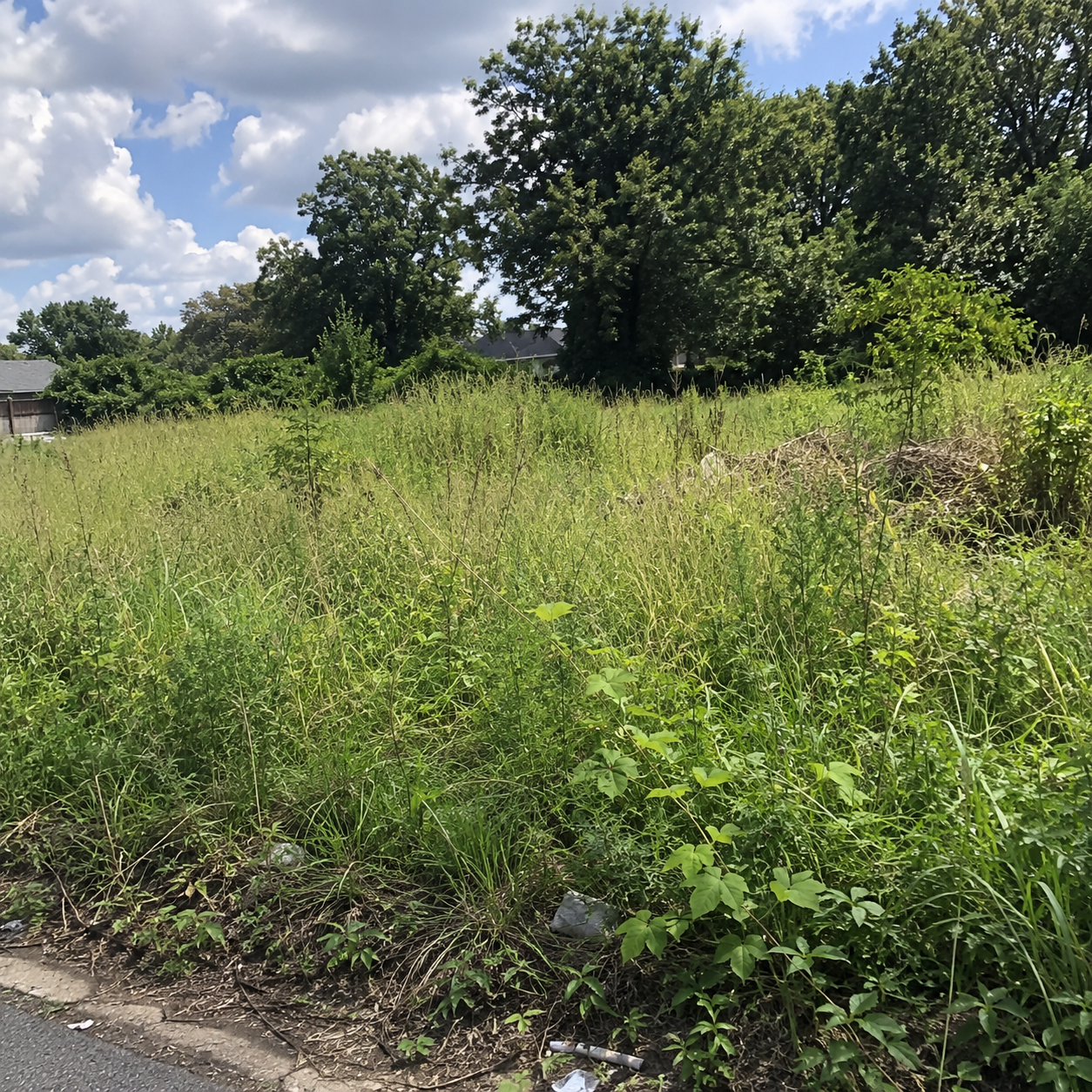
Coastal Georgia has one of the highest concentrations of a specific, well-documented ownership pattern called heirs’ property anywhere in the country — and Chatham County, given its history, is very much part of that pattern. Here’s how it typically happens: a property owner passes away without a will, and instead of the property going to one clear heir, ownership splits automatically among every living descendant — children, grandchildren, sometimes dozens of people, many of whom may have moved away, lost touch with the property, or never even known they held a legal share. Because there’s no single owner responsible for the property, decisions about taxes, repairs, or a sale require agreement from everyone — which in practice often means nothing happens at all. Taxes go unpaid, storm damage goes unrepaired, and the property is legally “owned” while functionally abandoned.
This isn’t a hypothetical for this part of Georgia. It’s the direct legacy of a period when formal estate planning — wills, deeds, probate — was often inaccessible to Black families in the rural South, and heirs’ property became, in effect, an informal but very real form of family land protection. It has also made that same land unusually vulnerable to loss through delinquent tax sales over the following century, in Chatham County and up and down the Georgia and South Carolina coast.
If your family is dealing with fractured or heirs’ property and your goal is to keep and clear it rather than sell it, the Georgia Heirs Property Law Center is a nonprofit legal organization that specifically helps Georgia families with title clearing, estate planning, and stopping land loss — a resource worth contacting before deciding what to do next.
If, after weighing your options, selling is the right move — whether the property has heirs’ property complications, back taxes, storm or flood damage, an open code violation, or has simply sat vacant for years — we buy Chatham County property directly, in whatever condition and ownership status it’s currently in. That includes situations with multiple heirs who need to agree on a sale, properties with tax liens that get resolved at closing, and homes that have been abandoned long enough to need real work.
Official Chatham County Resources
- Chatham County Government — general departments, permits, and county services
- Chatham County Tax Commissioner — pay property taxes, view delinquent balances, and apply for homestead exemptions
- Chatham County Board of Assessors / Property Search — assessed property values, parcel details, and exemption information
- Chatham County Superior Court Clerk — Real Estate Division — search deeds, liens, plats, and recorded real estate documents
- SAGIS — Savannah Area GIS Viewer — interactive parcel, zoning, and flood-zone mapping for Chatham County and Savannah
Get a Cash Offer on Your Chatham County Property
Whatever situation applies to your property — an inherited or heirs’ property sale, back taxes that have piled up, vacant land anywhere from Pooler to the coast, or a house that needs as-is repairs — call (404) 913-7086 or fill out the form below. We’ll follow up with next steps and a no-obligation cash offer, and we’re used to working through multi-heir ownership and title complications, not just straightforward single-owner sales.
Areas We Serve in Fulton County
We buy land throughout Fulton County. Here are some of the cities we serve: